
Missing teeth do more than affect your appearance — they raise your risk of decay, gum disease, and bone loss, and make eating and speaking harder over time. At Casco Bay Smiles, Dr. McVety replaces one to three consecutive missing teeth with custom-made dental bridges crafted from all-ceramic material to look, feel, and function like your natural teeth.
What Is a Dental Bridge?

A dental bridge spans the gap left by one to three consecutive missing teeth. It consists of artificial teeth — called pontics — held in place by crowns on each side of the gap, either anchored to natural teeth or to dental implants.
Every tooth plays a role in the health of your smile. When one goes missing, neighboring teeth begin to shift, bite pressure becomes uneven, and the jawbone beneath the gap starts to deteriorate. A bridge restores the full row, protecting everything around it.
Types of Dental Bridges
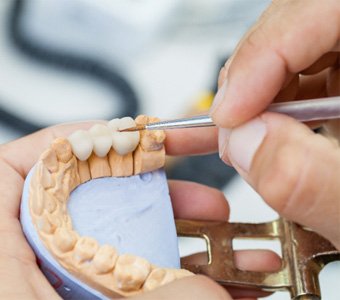
Traditional Bridge The most common option. Dental crowns are placed over the two healthy teeth on either side of the gap (called abutment teeth), with the pontic suspended between them. The abutment teeth require reshaping to accommodate the crowns. With proper care, a traditional bridge lasts about 10 years.
Implant-Supported Bridge Instead of crowns on natural teeth, one or two implant posts are surgically placed in the jawbone to anchor the bridge. This preserves the adjacent teeth entirely and also stimulates the jawbone to prevent bone loss — a significant long-term advantage. Implant-supported bridges can last for decades with proper care.
Benefits of Dental Bridges

• Natural-looking — all-ceramic construction matches your surrounding teeth in color, shape, and translucency • Restored function — eat a full diet and speak clearly without the issues missing teeth cause • Protects oral health — prevents neighboring teeth from drifting and reduces decay and gum disease risk • Confidence — a complete smile changes how you present yourself every day • Durable — with regular checkups and good home hygiene, bridges last a decade or more
Traditional vs. Implant Bridge: Which Is Right for You?

The right bridge for you depends on the health of your adjacent teeth, how much bone remains at the gap site, and your long-term goals.
If the teeth on either side of the gap are already heavily restored or crowned, a traditional bridge may be the most efficient choice. If those teeth are healthy and you want to preserve them — or if you're concerned about bone loss — an implant-supported bridge offers a more conservative and longer-lasting solution.
Dr. McVety will perform a thorough examination and walk you through both options at your consultation, including what to expect from each in terms of timeline, investment, and longevity.
Caring for Your Bridge
Bridge care is straightforward with a few key habits:
• Brush twice daily with a soft-bristled toothbrush • Floss beneath the pontic using a floss threader or water flosser to remove plaque from the gum line • Avoid biting hard objects like ice or pens that could crack the ceramic • Attend twice-yearly cleanings at Casco Bay Smiles so we can monitor the bridge and surrounding teeth
With consistent care, most patients get well over a decade from their bridge.